
Paver Patio Installation in Midlothian, VA: Sizing, Layout, Materials, and Project Timeline
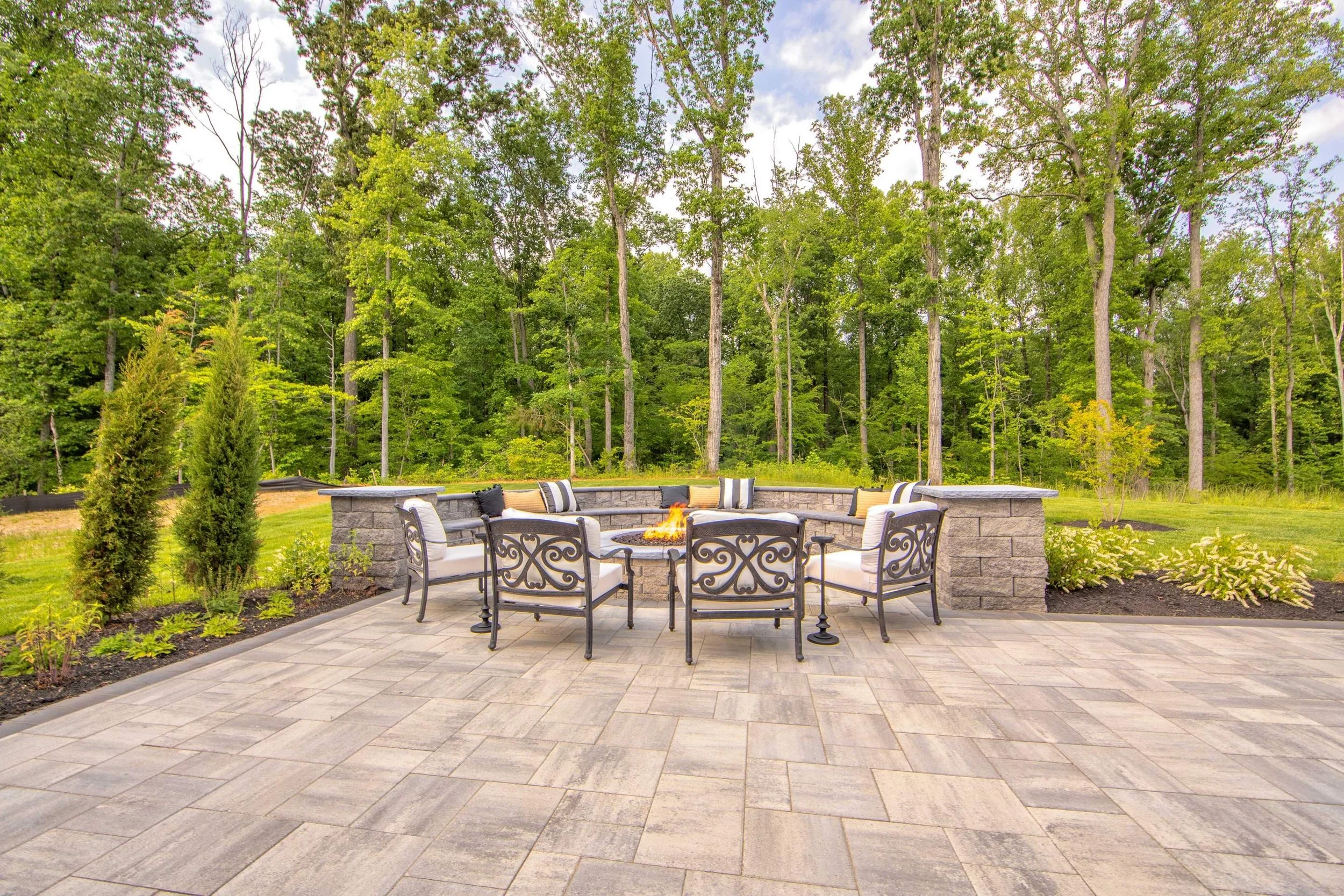
The back door opens onto a slope of red clay that stays soft for two days after a storm, and the grill balances on a strip of pea gravel that shifts underfoot. Choosing paver patio installation in Midlothian, VA, is rarely a matter of picking a color out of a brochure. It is a sequence of decisions about square footage, grade, base depth, and how the finished surface meets the house.
Josh Goff founded Commonwealth Curb Appeal in 2004 with a single lawn mower, moved the company into masonry and carpentry work in 2007, and our crews now build patios across Chesterfield County and greater Richmond as an ICPI and NCMA certified contractor.
This guide follows the decisions in the order they reach you: how long the work takes, how large the surface needs to be, which season suits the build, which pavers hold up in central Virginia, and what keeps a patio flat two decades later.
Related: Designing the Perfect Paver Patio and Outdoor Kitchen for Your Richmond, VA or Midlothian, VA Home
How Long Does a Paver Patio Installation Take?
Field time on a typical residential patio runs three days to two weeks. The calendar wrapped around that field time is considerably longer, and most of the waiting happens before a shovel touches the yard.
What Sets the Schedule Before Crews Arrive
Design usually takes two to four weeks. That covers the on-site measure, grade shots, a drawn layout, and a round or two of revisions once you see the shape against the house.
Material selection follows, and lead times matter: a stocked concrete paver ships in days, while a specialty face mix or an imported stone runs four to eight weeks. Utility locates through Virginia 811 add several business days that we build into the start date.
What Happens Once the Work Starts
Excavation takes one to two days on an average patio, longer where we are cutting into a slope or removing an old concrete slab. Base construction takes another one to two days, since compacted aggregate goes down in lifts rather than one deep pour.
Laying the field is the fastest visible phase, generally two to four days depending on pattern complexity and the number of cuts. Seating walls, steps, columns, and a pavilion footing each add their own days.
Rain is the variable nobody controls. Chesterfield County clay holds water, and a saturated subgrade cannot be compacted to spec, so a wet week pushes the schedule rather than the standards.
What Size Should a Paver Patio Be?
Size follows function, not the footprint of the yard. We size patios by mapping out the activities you named in the first meeting and then adding the circulation space between them.
Sizing by Function
A dining table for six needs roughly 12 by 14 feet once you allow 18 inches behind each pulled-out chair. A grill station with counter space on both sides wants 5 by 8 feet of its own, positioned so smoke drifts away rather than through the seating.
Lounge furniture around a fire feature typically asks for 12 by 14 feet, because the chairs pull back as the evening goes on. Walking lanes between zones hold at 36 inches minimum, and 48 inches where two people pass regularly.
Where Undersized Patios Fail
Add those zones together and a full outdoor living space in a Midlothian backyard usually lands between 450 and 800 square feet. The patios homeowners outgrow are the ones sized to a furniture set rather than to a way of living outdoors. A 12 by 16 rectangle holds a table and nothing else, so the grill ends up on the lawn and the fire pit gets pushed to a mulch bed.
Shape matters as much as area. Breaking a large surface into two or three linked terraces reads better against a sloped Chesterfield County lot than one wide plane, and it gives us places to work in retaining walls and steps that solve the drop instead of fighting it.
What Time of Year Is Right for Paver Patio Installation in Virginia?
Our crews build patios year round in central Virginia. The seasons differ in ground conditions and in how far out the schedule is booked, not in whether the work is possible.
Spring is the busiest window and the most weather-dependent one. March and April deliver saturated clay subgrades that slow excavation and compaction, and spring installations are usually sold the previous winter. Homeowners who call in April for a Memorial Day patio are generally looking at a summer date instead.
Late summer through early fall gives the most predictable ground conditions of the year in the Richmond region. Soil moisture is lower, days are still long, and plantings around a new patio go into warm soil ahead of dormancy. Fall is also when a finished patio gets used immediately, since October evenings around a fire feature are the reason many of these projects start.
Winter work is entirely workable here. Frozen ground stops compaction, but hard freezes in Chesterfield County are short, and a dormant lawn takes equipment traffic better than a June one.
Which Paver Materials Hold Up in Central Virginia?
We specify pavers from Techo-Bloc, Unilock, Nicolock, and Belgard on our patio projects, and the choice between them usually comes down to face texture, unit size, and color stability rather than durability.
Concrete Pavers
Manufactured concrete pavers dominate residential patio work in the Richmond area for good reason. Compressive strength sits well above poured concrete, the units are dimensionally consistent, and modern face mixes hold color through years of Virginia sun. Standard patio units are 60mm thick; anything carrying vehicle loads moves to 80mm, which is why a patio and a paver driveway are not the same spec.
Natural Stone and Travertine
Flagstone, bluestone, and travertine each bring a different character to a patio, and travertine stays notably cooler underfoot, which is why it shows up on so many of the pool decks we build. Natural stone carries thickness variation that demands more setting labor. Both material families work in this climate when the base underneath them is built correctly.
Freeze-Thaw and Clay Subgrades
Central Virginia averages several dozen freeze-thaw cycles a year, enough to move any surface sitting on a poorly drained base. Chesterfield County clay compounds it: clay holds water, water expands as it freezes, and the surface above it lifts.
Our answer is an aggregate base built deep enough for the soil we find, a geotextile separation layer over soft clay, and positive drainage away from the house. Permeable paver systems are worth discussing where stormwater has nowhere to go, since the open-graded base doubles as a reservoir.
Why Do Some Paver Patios Settle or Shift After a Few Years?
In nearly every failing patio we are asked to look at, the pavers themselves are fine. What failed sits below them.
Four causes account for most of it. An aggregate base placed too shallow for the subgrade cannot spread load, so traffic presses it into the clay. Base material compacted in one thick lift rather than several shallow ones leaves voids that close up over the first two winters. Missing edge restraint lets the outer courses creep outward, opening the joints, and water routed toward the patio undermines the base from beneath, usually at a downspout or a low corner.
Joint sand is the maintenance item few homeowners hear about. Polymeric sand locks the units into a working surface, and once it washes out of the joints the pavers begin to move independently. Refilling joints every several years costs very little; rebuilding a base after a decade of open joints does not.
Tree roots deserve their own note in older Midlothian and Bon Air neighborhoods. A mature willow oak within fifteen feet of a proposed patio changes the design, because adjusting the footprint now beats resetting a heaved corner later. Where a patio has already gone bad, our paver restoration services address the base rather than the symptom, and our post on what happens before the first paver is set covers the prep work in more detail.
Do Paver Patios Need to Be Sealed?
Sealing is optional rather than structural. A properly built paver patio performs for decades unsealed, and plenty of our clients leave theirs that way.
Sealer earns its keep in three situations: heavy entertaining where wine and grease reach the surface, patios under deciduous trees that drop tannin-rich leaves, and homeowners who want the saturated color a wet-look product delivers. Joint-stabilizing sealers add a second benefit by binding the polymeric sand, which slows the joint loss described above.
Timing matters more than product choice. New pavers need 60 to 90 days before sealing so efflorescence, the white haze that surfaces as cement cures, works its way out. Sealing over trapped efflorescence locks the haze in place. Reapplication typically runs every three to five years here, and a matte finish generally ages better on a large surface than a high-gloss one.
Related: Enjoy Warm Fireside Conversations and Outdoor Dining With a Paver Patio and Fire Pit in Richmond, VA
Do You Need a Permit for a Paver Patio in Chesterfield County?
Requirements vary by jurisdiction and by what is being built, so we confirm the specifics with the county before a design is finalized rather than after.
As a general pattern in this region, an at-grade patio with no roof, no walls above a set height, and no change to lot drainage falls outside building permit review. The triggers that pull a project into permitting are structures: a pavilion or other roofed shade structure, retaining walls above the county threshold, outdoor fireplaces with gas service, and anything inside a pool barrier. Impervious surface limits and easements apply on many newer Midlothian lots regardless of permit status.
Utility marking is not optional anywhere. We file with Virginia 811 before excavation on every project, and on properties with a septic field we locate the drainfield and reserve area first, because those cannot be built over.
Neighborhood architectural review is the step homeowners forget. Hallsley, Brandermill, Woodlake, and many other communities around Midlothian require submissions before construction, and approval commonly adds two to six weeks. We prepare those packages as part of the design phase so the review clock runs while material lead times run.
Designing the Patio Around the Rest of the Yard
A patio is the floor of an outdoor room, and the decisions that make it worth living on happen at the same time as the paving decisions, not two seasons later.
Shade is the first one. A pavilion over part of the surface extends usable hours through a Virginia July and keeps a dining zone comfortable at four in the afternoon. Its posts land on footings that go in during excavation, so committing to the structure early avoids cutting into finished paving to place them.
Cooking and gathering come next. An outdoor kitchen needs its gas, electric, and water rough-ins sleeved under the base before the field goes down. A fire feature needs a designed clearance and a seating radius. Seating walls do double duty by holding a grade change and giving fifteen people somewhere to sit without renting chairs.
Then there is what happens after sunset. Low-voltage lighting in the risers, along walls, and up into tree canopies turns a patio into an evening space, and the conduit for it is buried during the same excavation. Connecting walkways in a coordinated material tie the patio back to the driveway and the front entry.
Pool decks follow their own rules on slip resistance, coping detail, and drainage, which is why our custom paver patio and poolscape work overlap constantly. Our comparison of stamped concrete and pavers covers the surface question homeowners weigh most often.
How Our Design and Build Process Runs Together
One team designing and building the same project removes the gap where most outdoor construction problems live. No drawing gets handed off to a crew that has not stood on the site.
The first visit is measurement rather than sales. We shoot grades, find the low corners, note where water leaves the roof, locate the septic field, and photograph the sight lines out of every rear window. That data drives a drawn plan and, on larger projects, a rendered view so you are approving a space rather than a dimension.
Material selection happens with a designer who knows which units are in stock and which carry a two-month lead. Then one contract covers the whole scope: excavation, base, paving, walls, structures, lighting conduit, planting, and cleanup. Our work is warrantied and our crews are certified through ICPI and NCMA, which matters mainly because installation standards are where paver longevity is decided.
Our project gallery and our Midlothian outdoor living work show the range across Chesterfield County, and the paver patio installation page details the specifications we build to.
Schedule a Paver Patio Consultation With Commonwealth Curb Appeal
Bring us the yard you have avoided using: the slope that sheds water toward the foundation, the grill sitting on gravel, the door that opens onto nothing. We will walk it with you, shoot the grades, and put a real layout in front of you with materials you have touched. Our Midlothian paver patio projects started exactly there. Reach out through our contact page to schedule a paver patio installation consultation with Commonwealth Curb Appeal.
In Summary
How large should a paver patio be for a Midlothian, VA, backyard?
Most full outdoor living spaces land between 450 and 800 square feet once dining, cooking, lounging, and circulation zones are mapped separately. Sizing a patio to a single furniture set is the most common regret we hear.
How long does paver patio installation take in the Richmond, VA, area?
Plan on two to four weeks of design, material lead times of days to two months depending on the unit, and three days to two weeks of field time. Rain on Chesterfield County clay extends the field portion.
Does a paver patio need a permit in Chesterfield County, VA?
An at-grade patio commonly falls outside building permit review, while pavilions, taller retaining walls, and gas fire features generally do not. Neighborhood architectural approval applies in Hallsley, Woodlake, Brandermill, and similar Midlothian communities, and we handle those submissions.
What makes a paver patio last in central Virginia?
Base depth matched to the clay subgrade, aggregate compacted in lifts, edge restraint on every open side, drainage moving away from the house, and joint sand kept topped off. The pavers rarely fail. The base does.
Related: Add Shade and Character to Your Paver Patio by Including a Pergola in the Manakin-Sabot, VA Area

With one lawn mower and a lot of determination, Josh Goff started Commonwealth Curb Appeal in 2004 as a way to make a living while spending time in the great outdoors.
In 2007, he traded the lawn mower for masonry and carpentry skills and began building outdoor living spaces. By 2015, he was named among the Top 40 Under 40. Over the years, the company has grown into the full-service landscape design and build firm it is today.